
The long walk away
Grief and escape in Maborosi and Medusa

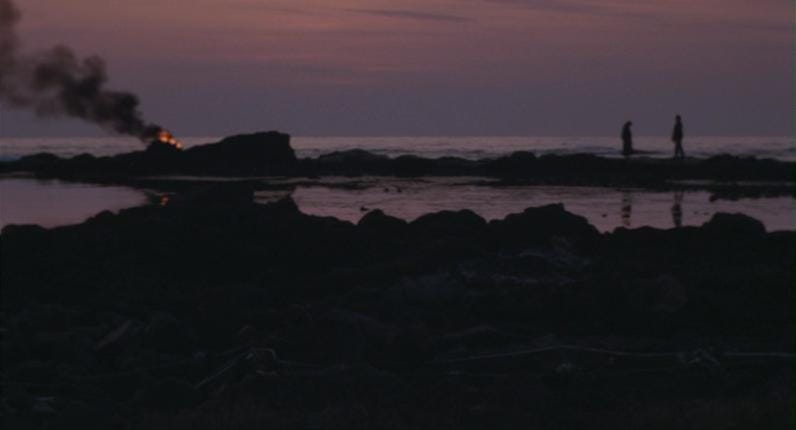
In Hirokazu Kore-eda’s fiction feature debut, Maborosi, grief comes in waves, like the ocean by which Yumiko concludes her journey. Following multiple unexpected and unresolved bereavements, she shadows a stranger’s funeral march by the rocks in an achingly beautiful climactic scene, waves crashing in, pursuing death with one question on her lips: why.
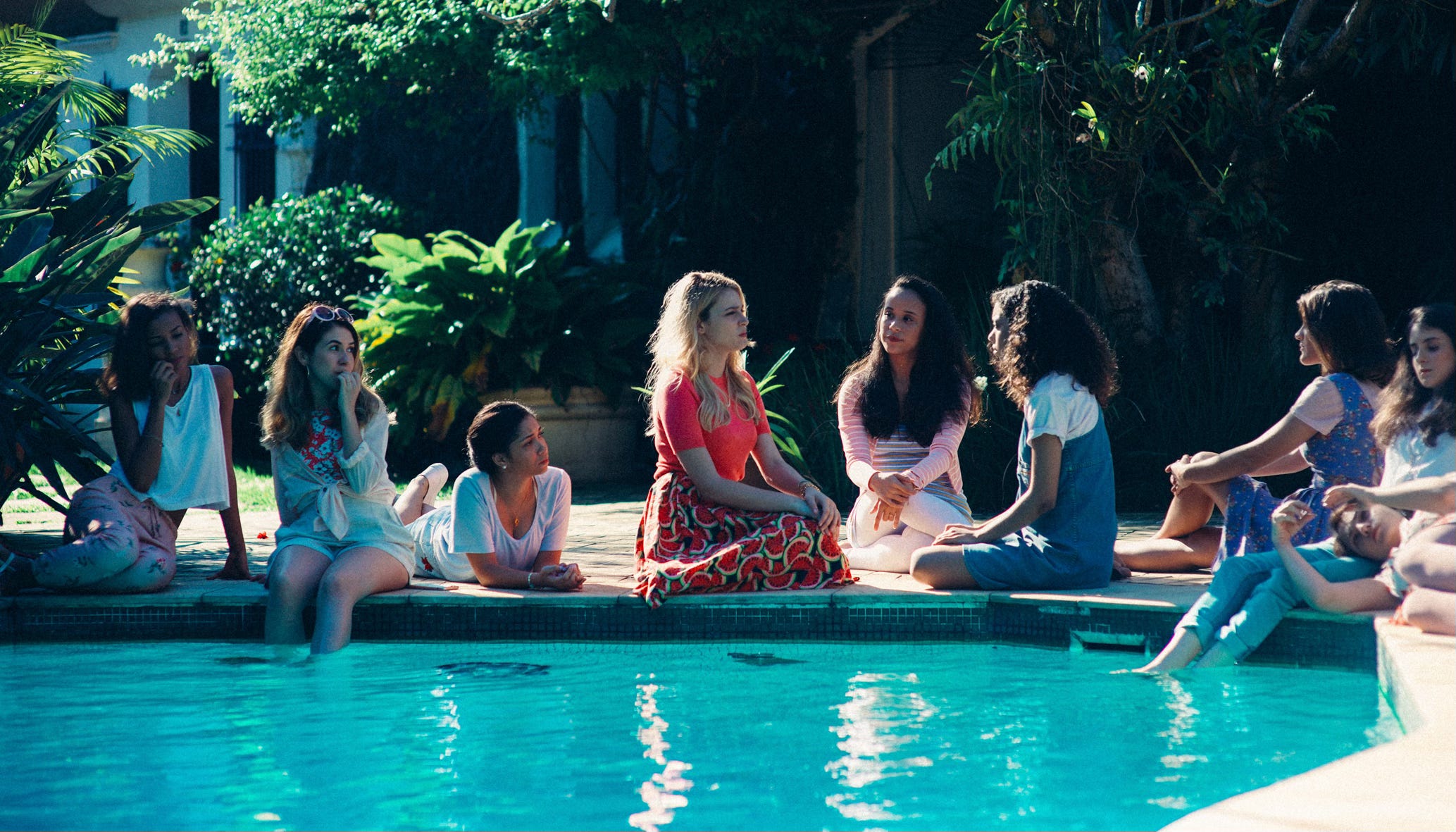
In Medusa, Anita Rocha da Silveira’s neon-bright genre-bender, Mari’s body begins to revolt against the ideology of her cult-like church, one that had previously trained her into unconscious obedience. Before this moment, she is framed as poised, devotional, and physically immaculate. To see the facade give way to a series of twitches and contortions, you witness the rebellion against repression move from the abstract realms of the mind, made flesh.
The difficulty of making private pain legible
These two scenes stuck with me because they seemed to be saying something similar about how private pain becomes legible, albeit from starkly different ends of the aesthetic and tonal spectrum. Roland Barthes talked about how meaning is never fixed in advance but is produced in from the interaction of image, viewer, and context, and watching these films right now, May 2026, provokes an encounter with how are own struggles are made legible.
Maborosi and Medusa, on the surface, could hardly be more different. The former is a 90s Japanese meditation of soft luminosity and slow, if any, motion. Landscape, silence, and shadows do as much work to express subtext as dialogue and action. The latter is a neon-soaked Brazilian pulsation against the bindings of oppression, every bit as smooth but way more energetic and shaped instead by colour, music, and bodily rebellion.
But the thematic plumbing fuelling each of them reveals a shared premise: women finding their interior lives under pressure.
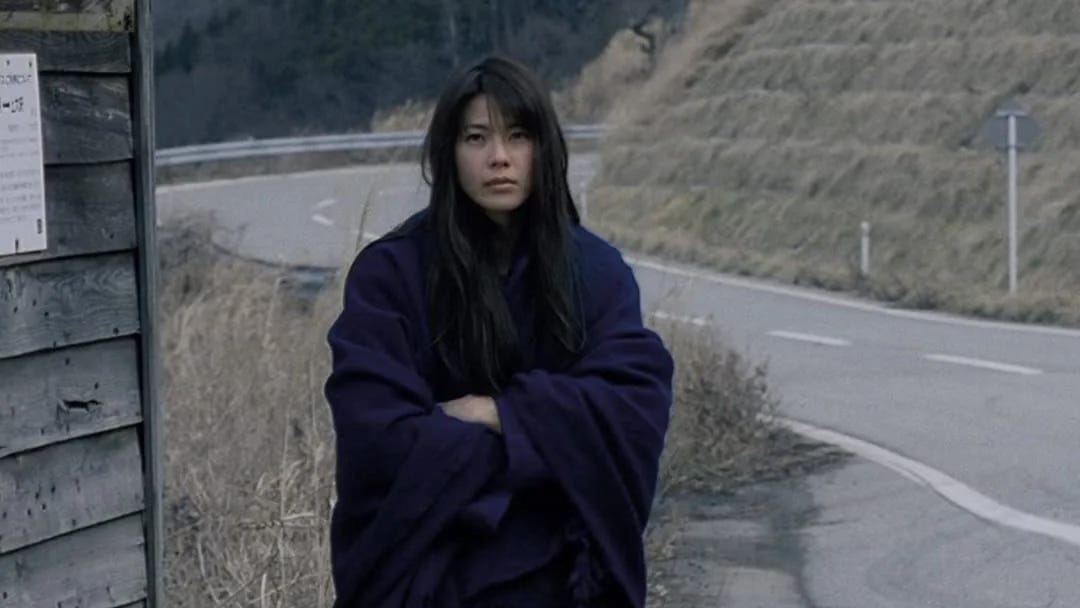
In Maborosi, grief is inhabited and absence has texture. The film’s slow, withholding rhythms make that absence feel almost physical. There’s one scene in particular where it does become so: Yumiko, woken from a nightmare, speaks to her new husband about her past trauma. Kore-eda frames Yumiko by the light spilling in through the window; her husband, further back in the room, is a mere silhouette. She is not alone, but accompanied only by shadow and emptiness.
In Medusa, by contrast, inner life is forced outward by a regime of moral discipline and feminine self-policing. That’s when the body becomes a site of revolt; indeed, the initial provocation Mari needs to begin to question her existence is an aesthetic injury. The fallout from this incident scratches the surface just enough for her to peek beneath, and so begins her conflict.

A nuanced psychology of feeling
What I find compelling now is the way both films resist a simple psychology of feeling, in stark contrast to the way culture today attempts to furnish the uncertain with simple answers. They don’t just offer interiority as a some form of confession and walk out of the booth. It’s mediated through social expectations and hierarchies and landscapes, unstable and difficult to translate. That feels especially challenging and therefore worthwhile to me in a culture where identity is so often expected to the fluent, legible, stable and on demend.
Where the films diverge in their outlay of this premise lies in form and tempo. Kore-eda uses his now-trademark brushstrokes of artistry: slow cinema, stillness coupled with long shots, and omission as signpost. Its long takes and muted palette imbue it with an ethics of restraint. And restraint is the right approach; it hardly needs to overstate what is unbearable about grief to translate its heaviness.
Silveira is a newer cinematic voice, and her stylisation feels altogether more in keeping with the brash freneticism of her age. She employs saturation and dread-laden synth, using motifs of collision, bodily improvisation, and a rapidly dissembling editing style that moves from curated, painterly, composed images at the outset to frames full of movement and noise, quick cuts.
Maborosi is most fully about unresolved loss, about the opacity of death and the way the bereaved are left to linger inside its unanswered questions. Medusa is most fully about oppression, especially the ideological violence done to women’s bodies and desires, and the eventual eruption of rage when that violence can no longer be contained.
Thinking about this divergence theoretically, Maborosi reflects Deleuze’s concept of duration over plot, prioritising the direct experience of time itself; Medusa is better read in terms of Laura Mulvey’s Visual Pleasure and Narrative Cinema, because it is so attentive to how bodies are looked at, disciplined, and converted into sites of control. Between Barthes, Deleuze, and Mulvey, there is a small but useful triangulation for thinking about the two films, their similarities and their differences.
How pain becomes image
But for me, both films are interested in the same problem: how pain becomes image. They answer it differently obviously, as any two artists necessarily will. One works through disappearance, the other through combustion. One invites contemplation, the other confrontation.
They both feel so resonant to me now, exemplars of different national cinemas, different historical moments, and different aesthetic traditions which are nonetheless both uncannily alert to the instability of subjectivity and to the ways the mind stores what language cannot resolve. Barthes again: meaning is never just what a film says. It’s what it makes possible to feel, and what it leaves unresolved for us to carry forward.
The comparison matters to me because it illuminates different ways of surviving the weight of experience. You can attempt to endure what cannot be answered or you can break open what cannot be tolerated, and there are so many examples of both to consider in 2026.
It is a beautiful piece. I haven't seen these yet, but now I need to. "One works through disappearance, the other through combustion" — that alone was worth the read. 💛